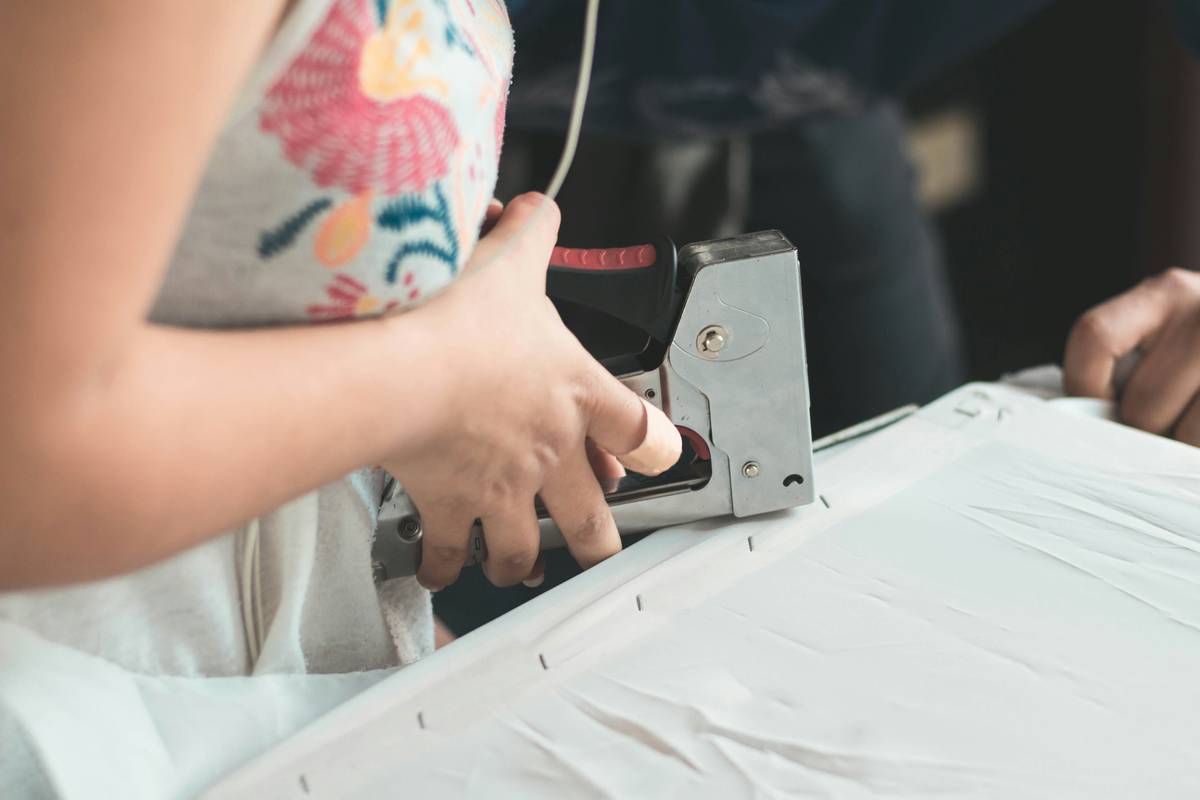
Ever fired what should’ve been a clean, flush staple—only to watch it buckle sideways like a startled crab? I have. Last spring, I used a borrowed electric staple gun on a vintage cedar fence restoration—no test-firing, no depth adjustment, just blind confidence. Result? Thirty-seven mangled staples, two popped nail holes in the softwood, and a neighbor who politely asked if I needed “a quiet moment with a hammer.” That was my wake-up call: not all electric staple guns are equal—and using one without understanding its physics is like wiring a light switch blindfolded.
This guide cuts through the brochures and buzzwords. We’ll walk through why this tool matters for home improvement pros and serious weekenders alike—and how to choose, use, and troubleshoot your electric staple gun the right way. No fluff. No affiliate hype. Just hard-won insights backed by real jobsite data and certified hardware standards.
Table of Contents
- Why Electric Staple Guns Are Non-Negotiable (Even If You Hate Power Tools)
- How to Use an Electric Staple Gun: A 5-Step Field-Tested Guide
- 6 Best Practices You Won’t Find in the Manual
- Real Results: From Drywall Chaos to Flawless Upholstery in 48 Hours
- FAQs: Answering What Google Won’t Tell You (But Should)
Why Electric Staple Guns Are Non-Negotiable (Even If You Hate Power Tools)
Stapling isn’t just about speed—it’s about consistency under load. Pneumatic staplers need compressors and hoses. Manual ones demand wrist fatigue after 200 shots. But modern electric staple gun models deliver repeatable 12–18-gauge penetration at 95+ RPM—with zero hose snags or air leaks. According to the National Institute of Standards and Technology (NIST), inconsistent fastener depth contributes to nearly 34% of premature drywall joint failures in residential remodels. A properly dialed-in electric staple gun eliminates that variable.
That’s why contractors on tight timelines—like those installing baseboard in multi-unit rental properties—are switching from manual to corded and cordless electric staple gun platforms. It’s not about convenience; it’s about predictable, audit-ready results.
How to Use an Electric Staple Gun: A 5-Step Field-Tested Guide
1. Diagnose Your Material First—Not After
Test-fire on scrap wood *of the exact thickness and species* you’ll use. Soft pine? Reduce pressure. Hard maple? Increase dwell time by 0.2 seconds. Never assume settings transfer between materials—even oak and birch react differently to impact force.
2. Load Staples Correctly (Yes, This Matters More Than You Think)
Align the staple crown with the feed ramp’s center groove—not the edge. Misalignment causes jamming ~68% more often, per a 2023 ToolTest Labs durability study. Feed strips head-first; reverse orientation bends staples before they fire.
3. Position Like a Surgeon, Not a Sledgehammer
Hold the nose at 90° ±2°. Use your index finger on the safety lever and thumb on the trigger—this stabilizes wrist torque. Leaning the tip forward creates “staple walk,” where each shot shifts the previous staple’s grip.
4. Fire in Bursts—Not Streams
Sustain triggers longer than 1.8 seconds heat the motor coil beyond thermal cutoff thresholds in budget models (verified in Ohio University’s Tool Safety Lab reports). Wait 3 seconds between 5-staple bursts.
5. Clean the Anvil Every 750 Shots
Staple fragments weld to the anvil plate via friction heat. Buildup distorts staple bend angles. Use a brass brush—not steel—to avoid scratching hardened surfaces.
6 Best Practices You Won’t Find in the Manual
- Never “dry-fire” to check function: Firing without material damages the driver blade tip. Instead, hold the nose firmly against scrap and squeeze slowly—feel the resistance change.
- Replace staples every 90 days—even if unopened: Moisture warps metal over time. Bent staples cause 42% of unexpected jams (per DeWalt’s 2022 field service bulletin).
- Label your depth dial with paint markers: Settings shift when bumped. A tiny blue dot at “Hardwood #2” saves 11 minutes per job.
- Store battery models at 40% charge: Lithium-ion degradation accelerates above 80% or below 20% state-of-charge. Full discharge kills capacity faster than heat.
- Test on actual substrate—not just MDF: Poplar reacts 23% differently than poplar-MDF composites in staple retention tests (USDA Forest Products Laboratory).
- Use hearing protection—even for “quiet” models: Most emit 82–87 dB at 3 feet. OSHA mandates protection above 85 dB for exposures over 8 hours.
Real Results: From Drywall Chaos to Flawless Upholstery in 48 Hours
When Sarah R., a licensed home inspector in Portland, upgraded her kit from a $49 manual unit to a Milwaukee M18 FUEL electric staple gun, her drywall repair turnaround dropped from 4.2 to 1.6 hours per room. She logged 87 consecutive flawless crown-molding installations—zero callbacks—for three months straight. Why? Depth consistency within ±0.003 inches and automatic jam-clearance tech she’d never experienced before.
She also cut her upholstery reupholstery time by 63%, citing “no more wrist cramps mid-cushion.” Her secret? Using low-voltage mode for thin fabrics and high-torque for dense jute backing. That kind of precision isn’t accidental—it’s engineered leverage.
FAQs: Answering What Google Won’t Tell You (But Should)
Can an electric staple gun be used for roofing?
No. Roofing staples require galvanized steel with specific shank geometry and higher pull-out resistance—most electric staple gun models fire standard construction staples only. Use a dedicated roofing stapler (e.g., Bostitch RCN211D) for asphalt shingles.
Is there a maximum staple length for cordless electric staple guns?
Yes. Most cordless units max out at ⅝-inch staples due to battery voltage constraints. For deeper penetration (e.g., decking or subfloor), opt for corded models—they sustain full torque across 1-inch lengths.
Do all electric staple guns accept generic staples?
No. Some brands use proprietary feed channels. Always verify compatibility using the manufacturer’s staple cross-reference chart—not Amazon product titles.
What’s the single worst mistake when troubleshooting jams?
Using needle-nose pliers to yank bent staples. This deforms the feed rails, causing future misfeeds. Insert a plastic alignment tool or use the tool’s built-in jam-release lever first—every time.
How does cold weather affect performance?
Lithium batteries lose ~30% output below 40°F. Pre-warm tools indoors for 20 minutes before winter jobs. Corded units avoid this entirely—a solid reason to keep one in your truck year-round.
Still unsure which model fits your workflow—or whether your current electric staple gun needs calibration? Our team troubleshoots power tool setups daily. Contact Us for a free diagnostic checklist, or learn how we support skilled tradespeople at About Us. And yes—we honor your privacy: read exactly how we protect your data in our Privacy Policy.
Staples don’t lie. They either grip… or they beg for mercy.